Gamification API for digital engagement and loyalty programmes
Launch missions, streaks, rewards and leaderboards in days — not months. A flexible REST API and programme management dashboard to run loyalty and retention directly inside your product.
Helping product teams drive retention, loyalty and measurable user behaviour inside digital products — from aviation and retail to lottery, education and beyond.
GameLayer is a gamification API platform for adding missions, rewards, and leaderboards to apps and websites.
FOR DEVELOPERS
Developer Quickstart Kit
Everything you need to integrate GameLayer in minutes — guides, API examples, Postman collections, and working client code.
- 10-minute Quickstart Guide
- In-depth Integration Guide
- One-page API Cheat Sheet
- Postman Collection with auto-discovery
- Example clients (JavaScript, Python, C#)
- curl scripts for core API flows
GameLayer Developer Kit
guides/
quickstart.md
integration-guide.md
cheat-sheet.md
postman/
GameLayer API.postman_collection.json
GameLayer DEV.postman_environment.json
examples/
javascript/
python/
csharp/
curl/ # GameLayer API Quickstart
Get from zero to your first gamification integration in ~10 minutes.
> **Note:** The code examples in this guide are simplified for clarity. See the [full client libraries](../examples/) for production-ready implementations with error handling.
## Prerequisites
- A GameLayer account with an **API key** (get one from the [dashboard](https://app.gamelayer.co))
- At least one **event** configured in the dashboard
- An HTTP client (curl, Postman) or your language of choice
## Environments
| Environment | API Base URL | Dashboard |
|-------------|-------------|-----------|
| Production | `https://api.gamelayer.co/api/v0` | [app.gamelayer.co](https://app.gamelayer.co) |
| Development | `https://api.dev.gamelayer.co/api/v0` | [app.dev.gamelayer.co](https://app.dev.gamelayer.co) |
## Authentication
Every request needs two things:
| What | Where | Example |
|------|-------|---------|
| API key | `api-key` header | `api-key: your-api-key-here` |
| Account ID | `account` query param or request body | `account=my-account` |
```
GET /api/v0/events?account=my-account
Host: api.gamelayer.co
api-key: your-api-key-here
```
---
## Step 1: Create a Player
Players represent your users inside GameLayer. Use your own user ID as the player ID to keep the mapping simple.
### curl
```bash
curl -X POST https://api.gamelayer.co/api/v0/players \
-H "api-key: YOUR_API_KEY" \
-H "Content-Type: application/json" \
-d '{
"account": "YOUR_ACCOUNT",
"player": "user-123",
"name": "Jane Doe"
}'
```
### JavaScript (fetch)
```javascript
const BASE_URL = "https://api.gamelayer.co/api/v0";
const API_KEY = "YOUR_API_KEY";
const ACCOUNT = "YOUR_ACCOUNT";
const res = await fetch(`${BASE_URL}/players`, {
method: "POST",
headers: {
"api-key": API_KEY,
"Content-Type": "application/json",
},
body: JSON.stringify({
account: ACCOUNT,
player: "user-123",
name: "Jane Doe",
}),
});
const player = await res.json();
console.log(player);
```
### Python (requests)
```python
import requests
BASE_URL = "https://api.gamelayer.co/api/v0"
API_KEY = "YOUR_API_KEY"
ACCOUNT = "YOUR_ACCOUNT"
headers = {"api-key": API_KEY, "Content-Type": "application/json"}
res = requests.post(f"{BASE_URL}/players", headers=headers, json={
"account": ACCOUNT,
"player": "user-123",
"name": "Jane Doe",
})
player = res.json()
print(player)
```
### Expected response (201 Created)
```json
{
"player": "user-123",
"name": "Jane Doe",
"tags": [],
"category": "",
"imgUrl": "",
"isAvailable": true,
"points": 0,
"credits": 0,
"team": "",
"level": { "id": "", "name": "", "description": "", "imgUrl": "", "ordinal": 0 },
"createdOn": "2025-03-15T10:30:00.000Z"
}
```
The player starts with **0 points** and **0 credits**. Points accumulate over time and drive level progression. Credits are a spendable balance for the prize shop.
---
## Step 2: Set Up Gamification (Dashboard)
Before your player can earn rewards, you need game elements configured in the [GameLayer Dashboard](https://app.gamelayer.co) (or [dev dashboard](https://app.dev.gamelayer.co)):
- **Events** — the actions your users take (e.g., "complete-lesson", "make-purchase")
- **Missions** — goals with objectives tied to events (e.g., "Complete 5 lessons this week")
- **Achievements** — step-based milestones (e.g., "Complete 10 missions")
- **Levels** — progression tiers based on accumulated points
- **Prizes** — reward shop items redeemable with credits
If you're using a development account, sample elements may already be configured for you.
---
## Step 3: Complete an Event
This is the core integration point. When a user performs an action in your app, call `POST /events/{id}/complete`. GameLayer handles the rest through the **progression cascade** — a single call can trigger mission progress, achievement steps, level ups, streak updates, and leaderboard changes.
### curl
```bash
curl -X POST https://api.gamelayer.co/api/v0/events/complete-lesson/complete \
-H "api-key: YOUR_API_KEY" \
-H "Content-Type: application/json" \
-d '{
"account": "YOUR_ACCOUNT",
"player": "user-123",
"count": 1
}'
```
### JavaScript
```javascript
const res = await fetch(`${BASE_URL}/events/complete-lesson/complete`, {
method: "POST",
headers: {
"api-key": API_KEY,
"Content-Type": "application/json",
},
body: JSON.stringify({
account: ACCOUNT,
player: "user-123",
count: 1,
}),
});
const result = await res.json();
console.log("Points earned:", result.progress.points.earned);
console.log("Missions completed:", result.progress.missions);
```
### Python
```python
res = requests.post(
f"{BASE_URL}/events/complete-lesson/complete",
headers=headers,
json={
"account": ACCOUNT,
"player": "user-123",
"count": 1,
},
)
result = res.json()
print("Points earned:", result["progress"]["points"]["earned"])
print("Missions completed:", result["progress"]["missions"])
```
### Expected response (200 OK)
```json
{
"event": {
"id": "complete-lesson",
"name": "Complete Lesson",
"reward": { "points": 10, "credits": 5, "achievements": [] }
},
"player": { "name": "Jane Doe", "points": 10, "credits": 5 },
"progress": {
"points": { "before": 0, "earned": 10 },
"credits": { "before": 0, "earned": 5 },
"missions": [],
"startedMissions": [
{ "id": "weekly-challenge", "name": "Weekly Challenge", "description": "Complete 5 lessons this week", "imgUrl": "..." }
],
"achievements": [],
"unlockedAchievements": [],
"levels": { "completed": [], "started": {} },
"completedStreaks": [],
"activeStreaks": [],
"rules": []
}
}
```
**Reading the `progress` object:**
| Field | Meaning |
|-------|---------|
| `points.earned` | Total points earned from this cascade (after rule multipliers) |
| `credits.earned` | Total credits earned |
| `missions` | Missions **completed** by this event (with reward details) |
| `startedMissions` | Missions that **started** progressing |
| `achievements` | Achievements **completed** |
| `unlockedAchievements` | Achievements that received steps but aren't complete yet |
| `levels.completed` | Levels the player advanced through |
| `levels.started` | The player's new current level (if they leveled up) |
| `completedStreaks` | Streaks that completed |
| `activeStreaks` | Streaks that incremented |
---
## Step 4: Check Player Progress
Query specific progress areas to build your UI.
### Get player missions
```bash
curl "https://api.gamelayer.co/api/v0/players/user-123/missions?account=YOUR_ACCOUNT&completion=all" \
-H "api-key: YOUR_API_KEY"
```
```javascript
const res = await fetch(
`${BASE_URL}/players/user-123/missions?account=${ACCOUNT}&completion=all`,
{ headers: { "api-key": API_KEY } }
);
const data = await res.json();
console.log("Started missions:", data.missions.started);
console.log("Completed missions:", data.missions.completed);
```
```python
res = requests.get(
f"{BASE_URL}/players/user-123/missions",
headers=headers,
params={"account": ACCOUNT, "completion": "all"},
)
data = res.json()
print("Started:", data["missions"]["started"])
print("Completed:", data["missions"]["completed"])
```
### Get player achievements
```bash
curl "https://api.gamelayer.co/api/v0/players/user-123/achievements?account=YOUR_ACCOUNT" \
-H "api-key: YOUR_API_KEY"
```
### Get player levels
```bash
curl "https://api.gamelayer.co/api/v0/players/user-123/levels?account=YOUR_ACCOUNT" \
-H "api-key: YOUR_API_KEY"
```
---
## Step 5: Prize Economy
Players spend **credits** to claim prizes from your reward shop.
### List available prizes
```bash
curl "https://api.gamelayer.co/api/v0/prizes?account=YOUR_ACCOUNT&player=user-123" \
-H "api-key: YOUR_API_KEY"
```
Passing `player` filters to only prizes the player is eligible for (meets requirements and has stock).
### Claim a prize
```bash
curl -X POST https://api.gamelayer.co/api/v0/prizes/cup-coffee/claim \
-H "api-key: YOUR_API_KEY" \
-H "Content-Type: application/json" \
-d '{
"account": "YOUR_ACCOUNT",
"player": "user-123"
}'
```
```javascript
const res = await fetch(`${BASE_URL}/prizes/cup-coffee/claim`, {
method: "POST",
headers: {
"api-key": API_KEY,
"Content-Type": "application/json",
},
body: JSON.stringify({
account: ACCOUNT,
player: "user-123",
}),
});
const claim = await res.json();
console.log("Claim result code:", claim.code);
console.log("Remaining credits:", claim.player.credits);
```
```python
res = requests.post(
f"{BASE_URL}/prizes/cup-coffee/claim",
headers=headers,
json={"account": ACCOUNT, "player": "user-123"},
)
claim = res.json()
print("Claim result:", claim["code"])
print("Remaining credits:", claim["player"]["credits"])
```
### Claim response codes
| Code | Meaning |
|------|---------|
| `2` | **REDEEMED** — success, credits deducted |
| `3` | NOT_ENOUGH_CREDITS — insufficient balance |
| `4` | OUT_OF_STOCK — no stock remaining |
| `5` | COUNT_EXCEEDED — player hit their redemption limit for this period |
---
## What's Next
- **[Integration Guide](integration-guide.md)** — Common patterns, architecture guidance, and advanced scenarios
- **[API Cheat Sheet](cheat-sheet.md)** — One-page reference of all endpoints and parameters
- **[Postman Collection](../postman/)** — Import and explore the API interactively
- **[Code Examples](../examples/)** — Copy-paste client libraries in JavaScript, Python, C#, and curl
- **[API Reference](https://gamelayer.io/api-docs)** — Full interactive documentation with try-it-out
Add some STICKY to your site or app
Design modular engagement loops — powered by a flexible suite of API-driven mechanics.
A modular engagement loop - combine progression, competition and rewards
GameLayer gives you building blocks that connect — so you can design repeatable loops, progression, and rewards without rebuilding logic in your app. Mix and match mechanics, tune behaviours with rules, and evolve programmes over time.
Designed for real engagement — not short-term gimmicks
Open API
Build engagement directly into your product with a flexible REST API. Send events, evaluate rules, and award outcomes in real time — without hardcoding gamification logic into your app.
Content Dashboard
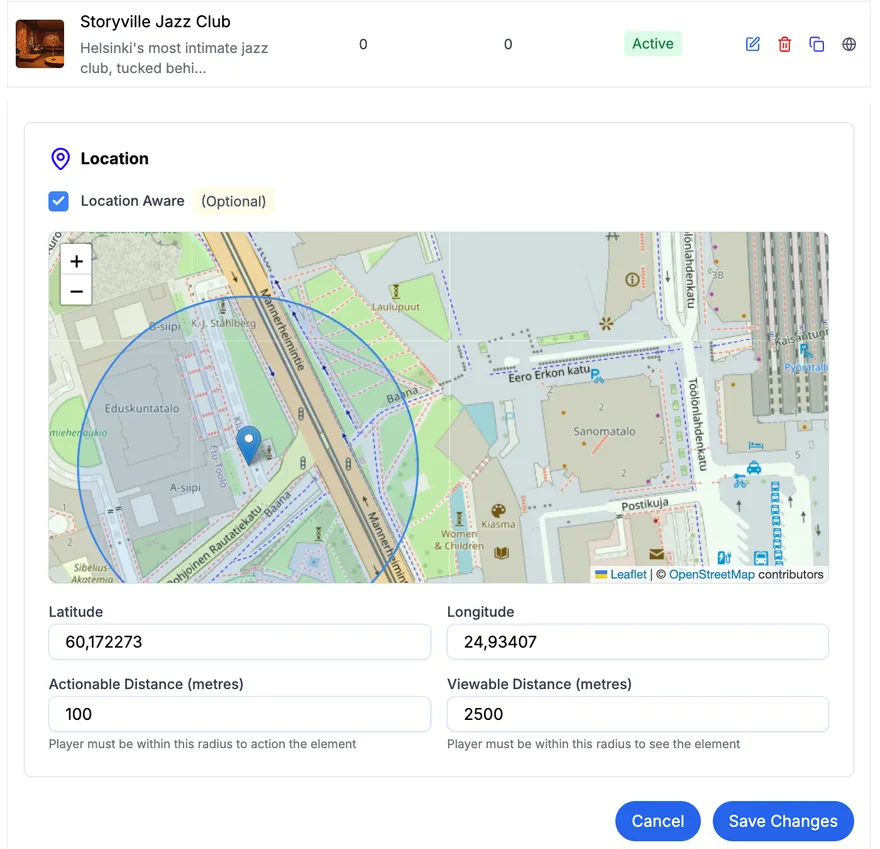
Give product and marketing teams a place to manage programme content — missions, copy, images, and configurations — without shipping new releases. Keep programmes fresh while engineering stays focused.
Rules Manager
Control how mechanics behave using eligibility, limits, and budgets. Launch safely, prevent abuse, and tune programmes based on performance — not guesswork.
How GameLayer drives measurable business outcomes
GameLayer turns engagement mechanics into real performance results — from higher retention and loyalty to behaviour change and revenue-driving actions.
Turn passive users into active participants
Structured missions, challenges and progression give users clear reasons to engage — moving them from browsing to meaningful interaction.
Create repeat usage without constant promotions
Streaks, levels and ongoing goals build habits around your product, increasing visit frequency and long-term retention.
Drive actions that impact growth
Guide users toward purchases, referrals, learning or feature adoption using targeted objectives and rewards — not just generic engagement.
Understand what actually drives behaviour
Track participation, progression and outcomes so teams can see which mechanics influence users — and optimise programs over time.
Powered by GameLayer
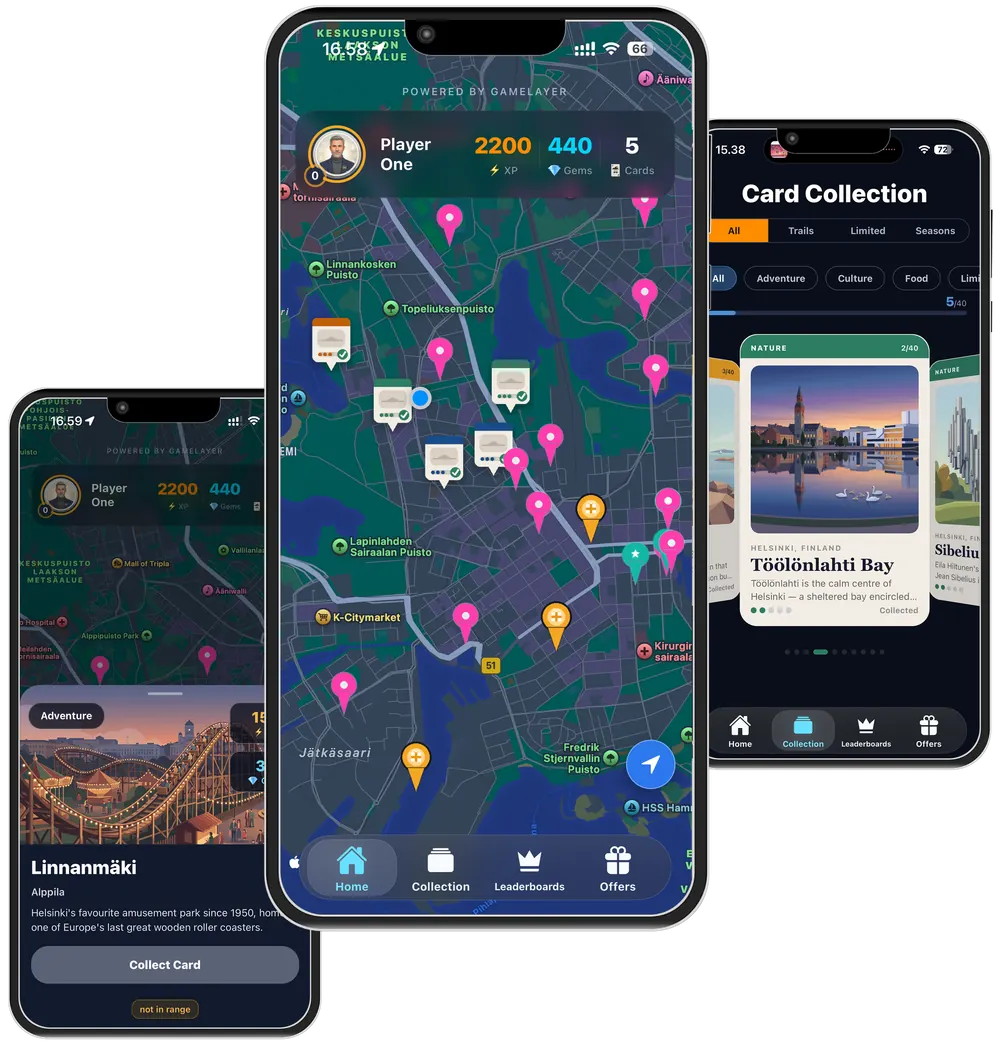
GameLayer powers real engagement and loyalty systems inside live digital products. The examples below show how the same core mechanics — missions, progression, rewards and rules — are applied to very different business models.
Finnair | Airline
Driving repeat engagement beyond transactions. GameLayer powers missions, rewards and progression mechanics that encourage return visits, deeper product use and long-term customer relationships.
Reima | Retail
Turning physical activity and learning into digital engagement. GameLayer powers seasonal challenges, daily streaks and achievements that connect real-world behaviour to brand interaction.
Veikkaus Points | National Lottery
Adding progression and rewards on top of regulated gaming experiences. GameLayer enables missions, tiers, and campaigns that increase participation while respecting platform rules and constraints.
Step-Up | Wellbeing
Encouraging healthy behaviour through structured engagement loops. GameLayer powers challenges, progression systems and team-based mechanics that motivate ongoing participation.
Learn more about Step-Up
Why companies choose GameLayer
GameLayer is chosen by teams that need engagement mechanics to work reliably at scale — across products, users, and real-world programmes.
Simple, transparent pricing
Choose a plan based on programme size — not features. Every plan includes full access to GameLayer's engagement mechanics, replacing the need to build and maintain complex in-house engagement systems.
Core
- Up to 1,000 active users
Growth
- Up to 50,000 active users
Scale
- Up to 250,000 active users
Enterprise
- Above 500,000 active users
These plans represent common programme sizes. GameLayer pricing scales flexibly across additional usage tiers — Contact us for more details.
Start building engagement that lasts
Whether you're experimenting or scaling in production, GameLayer gives you the tools to design engagement mechanics that fit your product - quickly and safely.
Free plan includes usage limits - No credit card required